Personalized Medical Care & Dedicated International Patient Concierge


Specialty Overview
Non-Surgical Facial Lifting & Skin Tightening
Non-surgical facial lifting and skin tightening at SeouLeaguer Dermatology in Gangnam, Seoul — Ultherapy PRIME, Thermage FLX, HIFU and RF options reviewed by board-certified dermatologists and a board-certified plastic…
Schedule a ConsultationNon-Surgical Facial Lifting & Skin Tightening

Medically reviewed by Dr. Lee Jung Hoon, Dr. Kim Sung Wook (board-certified dermatologists) and Dr. Choi Hang Seok (board-certified plastic surgeon), SeouLeaguer Dermatology, Seoul
Non-surgical facial lifting and skin tightening uses focused ultrasound, radiofrequency (RF) or laser energy to improve facial laxity, firmness and the appearance of wrinkles without the incisions or recovery of a surgical facelift.
What Is Non-Surgical Facial Lifting & Skin Tightening?
Non-surgical facial lifting and skin tightening is a category of aesthetic treatments that heat tissue beneath the skin to trigger the body's own collagen-remodeling response, gradually improving firmness and contour over weeks to months rather than immediately.
- Delivered through focused ultrasound (MFU/HIFU), monopolar or bipolar radiofrequency, or multi-wavelength laser devices, depending on the technology selected.
- Targets mild-to-moderate skin laxity, early jowling and reduced facial firmness — not the degree of sagging a surgical facelift addresses.
- Performed without general anesthesia; most sessions run 15–90 minutes depending on the device and treatment area.
- Results build gradually (commonly over 2–6 months) as new collagen forms, rather than appearing immediately after treatment.
- No surgical incisions, so there is little to no formal downtime for most of the technologies offered here.
Who Performs Non-Surgical Facial Lifting & Skin Tightening at SeouLeaguer Dermatology
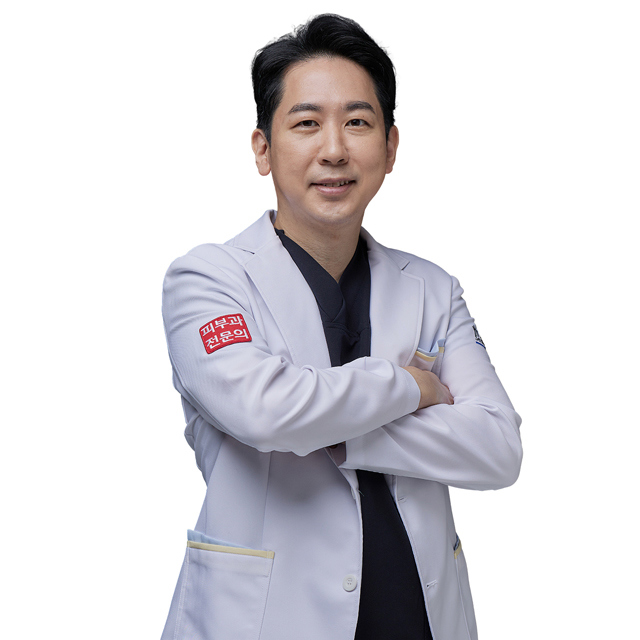
Dr. Lee Jung Hoon, Chief Director Board-certified Dermatologist Dr. Kim Sung Wook
Board-certified Dermatologist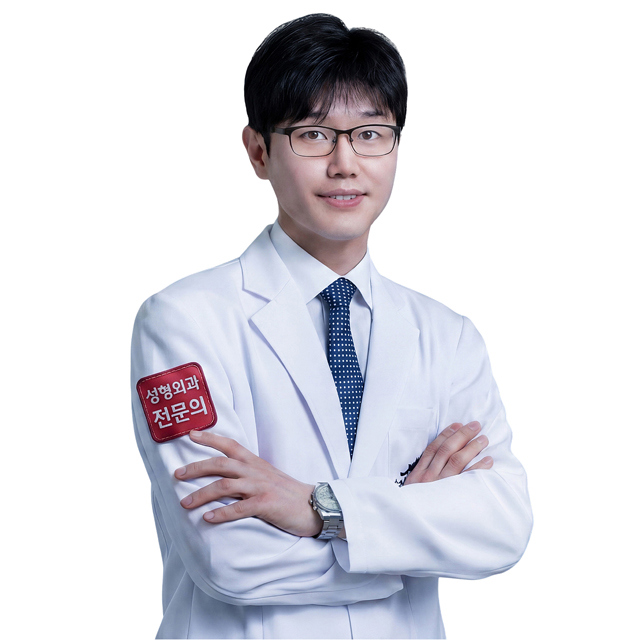 Dr. Choi Hang Seok
Board-certified Plastic Surgeon
Treatment planning and device selection for this specialty are shared across SeouLeaguer Dermatology's three specialists.
- Dr. Lee Jung Hoon, Chief Director and a board-certified dermatologist with 24+ years of practice (Catholic University College of Medicine; former director, Samsung CHA & PARK Dermatology; adjunct professor of dermatology, Catholic Central Medical Center), assesses skin laxity and selects energy-based protocols as part of the clinic's broader laser and non-surgical lifting work.
- Dr. Kim Sung Wook, a board-certified dermatologist with 29+ years of experience and a professor of dermatology at the Catholic University of Korea, focuses on anti-aging dermatology and non-surgical facial lifting within his listed subspecialty work.
- Dr. Choi Hang Seok, a board-certified plastic surgeon who completed his residency at Seoul St. Mary's Hospital, The Catholic University of Korea, brings a surgical perspective to candidacy assessment — useful when a patient's degree of laxity is borderline between a non-surgical technology and a referral discussion about more invasive options.
The clinic states that its plastic surgery and dermatology specialists collaborate on skin and lifting treatment planning, with device settings customized to each patient's skin condition, elasticity and facial structure.
Non-Surgical Facial Lifting & Skin Tightening Options Available
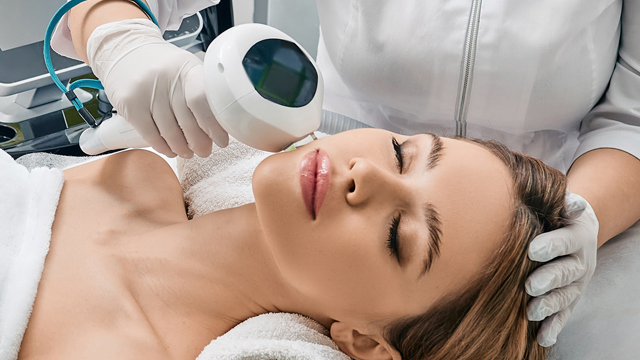
SeouLeaguer Dermatology offers thirteen energy-based technologies under this specialty. They differ mainly in energy type and the tissue depth they target — choosing between them is a clinical decision made at consultation, not a menu pick.
| Technology | Energy type | Typical use case |
|---|---|---|
| Ultherapy PRIME® | Microfocused ultrasound with real-time visualization (MFU-V) | Deeper lifting at 1.5/3.0/4.5 mm depths; brow, jawline, neck laxity |
| Thermage FLX® | Monopolar radiofrequency | Overall firmness and wrinkle softening with a single session |
| ONDA Lifting | Microwave energy | Localized facial fullness plus mild laxity |
| Oligio | Monopolar radiofrequency | Mild-to-moderate laxity, convenience-focused protocol |
| Shurink Universe | High-intensity focused ultrasound (HIFU/MPT) | Gradual lifting and tightening, low downtime |
| Titanium Lifting | Triple-wavelength (755/810/1064 nm) laser | Early laxity plus overall skin tone/brightness |
| InMode Lifting | Bipolar radiofrequency (FX/MiniFX/FORMA handpieces) | Lower-face fullness, jowls, jawline definition |
| Diamond Line Lifting | Minimally invasive lifting threads | Sagging cheeks/jawline wanting mechanical support |
| Multi-Device Combination Lifting | Two or more of the above | Multiple concerns across different tissue depths |
| Thread Lifting | Absorbable lifting threads | Mechanical repositioning with gradual collagen response |
| Sofwave™ | Synchronous ultrasound | Skin tightening with an alternative ultrasound profile to Ultherapy |
| AllTite Lifting | Radiofrequency | General tightening protocol |
| Corage 2.0 | Multi-frequency resonance | Skin rejuvenation alongside tightening |
Ultherapy PRIME® (MFU-V Lifting). This is a non-invasive microfocused ultrasound treatment with real-time visualization. The system's DeepSEE imaging lets the practitioner see tissue before and during treatment, and its transducers treat at approximately 1.5 mm, 3.0 mm and 4.5 mm depths — corresponding roughly to the superficial dermis, deep dermis and deeper SMAS/platysma-level tissue, with imaging reaching about 8 mm. It is generally performed without anesthesia, and a session runs about 30–90 minutes. Reported recovery is short (1–3 days), with gradual tightening typically developing over 2–3 months and commonly discussed as lasting up to around a year.
Thermage FLX® (Monopolar RF Tightening). Thermage FLX® delivers monopolar radiofrequency energy to heat the skin and underlying tissue in a controlled way, stimulating collagen remodeling. The system pairs this with cooling and vibration for comfort. Most patients complete it in a single 30–60 minute session with little to no formal downtime, and improvement in firmness and wrinkle appearance tends to build over roughly 2–6 months.
ONDA Lifting (Microwave Facial Contouring). ONDA uses microwave energy to heat targeted tissue and is used here for localized facial fullness, mild laxity and contour concerns. It does not involve incisions, and most patients resume normal activity shortly afterward, though temporary redness, warmth or tenderness is possible depending on treatment intensity.
Oligio (RF Lifting). Oligio applies monopolar radiofrequency to heat tissue beneath the skin in support of collagen remodeling, aimed at mild-to-moderate laxity. A session commonly runs 30–60 minutes, and the clinic can often complete treatment in a single visit, though additional sessions may be recommended depending on individual goals.
Shurink Universe (HIFU Lifting). Also referred to by its underlying platform name, ULTRAFORMER MPT, Shurink Universe uses Micro Pulsed Technology with interchangeable cartridges (Ultra F cartridges at 1.5, 2.0, 3.0 and 4.5 mm; Booster cartridges at 1.5, 3.0 and 4.5 mm) to create controlled thermal coagulation points that support collagen contraction. It is generally considered low-downtime, with some tightening noticeable early and further improvement developing over following weeks.
Titanium Lifting (Triple-Wavelength Laser Treatment). This protocol commonly uses the Soprano Titanium platform, combining 755 nm, 810 nm and 1064 nm wavelengths with contact cooling in one applicator. Sessions run roughly 15–40 minutes depending on area and protocol, and it is positioned for early laxity, reduced firmness and overall skin-tone improvement rather than significant volume or contour change.
InMode Lifting (Bipolar RF Contouring)**.**Depending on the handpiece selected, InMode's FX/MiniFX modes use RF with vacuum assistance for areas of unwanted fullness, while its FORMA handpiece applies bipolar RF heating for tightening. It is typically used for double-chin concerns, jowls and jawline definition, with a roughly 15-minute treatment time and short recovery.**Diamond Line Lifting.**This is a minimally invasive option using lifting threads placed beneath the skin to provide mechanical support while also stimulating gradual tightening. It is considered for mild-to-moderate loss of elasticity, early sagging or blurred cheek/jawline contours, generally performed as an outpatient procedure without general anesthesia.**Multi-Device Combination Lifting.**Rather than a single device, this combines two or more of the technologies above — for example ultrasound/HIFU paired with RF — within one plan tailored to a patient with more than one concern (such as deeper laxity plus jowling or a double chin) that a single technology may not fully address.Thread Lifting. Absorbable lifting threads are placed to mechanically reposition and support sagging tissue while prompting a gradual collagen response around the thread track, giving both an immediate mechanical effect and a slower-developing tightening effect.
Sofwave™ (Synchronous Ultrasound Skin Tightening). Sofwave™ is an ultrasound-based tightening technology offered as an alternative ultrasound profile to Ultherapy PRIME®, selected based on the practitioner's assessment of the patient's skin and treatment goals.
AllTite Lifting (Radiofrequency Tightening). A further radiofrequency-based tightening protocol offered within the clinic's device lineup for patients whose consultation points to an RF-based approach.
Corage 2.0 (Multi-Frequency Resonance Skin Rejuvenation). This technology combines multiple resonance frequencies aimed at skin rejuvenation alongside tightening, used when a patient's goals extend beyond firmness alone to overall skin quality.
Who Is a Good Candidate for Non-Surgical Facial Lifting & Skin Tightening?
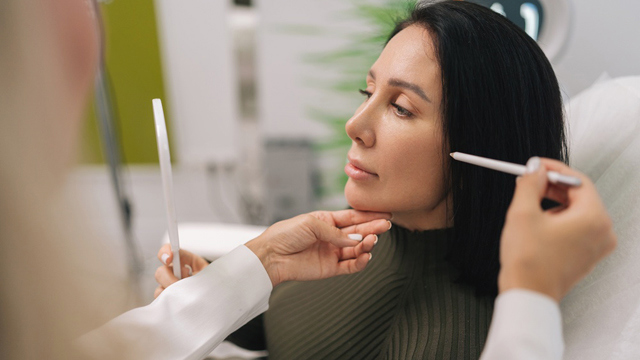
- Adults with mild-to-moderate skin laxity, early jowling, reduced facial firmness or loss of definition who want improvement without a surgical facelift.
- Patients wanting a treatment selected from several technology options according to their skin laxity, facial contour and goals, rather than a single fixed protocol.
- Not generally suitable: patients with severe skin excess or advanced facial/neck sagging, who are unlikely to reach facelift-level results from a non-surgical option.
- Not suitable during an active skin infection, over open wounds, or with significant untreated skin disease in the treatment area — these should be addressed first.
- Patients with certain implanted electronic devices (pacemakers, defibrillators) or metallic implants in the treatment area need individual screening before RF- or ultrasound-based options.
- Pregnancy is listed as a reason to postpone several of these technologies (including ONDA Lifting and Oligio) until after delivery, pending individual clinical assessment.
- Because the clinic offers thirteen distinct technologies rather than one default device, candidacy is assessed per-technology at consultation — a patient who is not suited to one option (for example, a deeper-tissue ultrasound treatment) may still be a good candidate for another (such as a more superficial laser-based protocol), depending on where their laxity sits and how it was assessed.
What to Expect: Procedure, Recovery, and Results Timeline
| Stage | What typically happens |
|---|---|
| Consultation | Assessment of laxity location/degree, skin quality, facial fat distribution and aesthetic goals; device and treatment area selected. |
| Procedure | Cleansing and preparation, then energy delivery through the chosen handpiece (or thread placement for Thread/Diamond Line Lifting); 15–90 minutes depending on technology. |
| Immediate aftermath | Temporary redness, swelling, tenderness, discomfort, bruising or altered sensation, varying by device. |
| Recovery | Approximately 3–5 days for most protocols in this category; several technologies (Oligio, Shurink Universe, Titanium, InMode, Diamond Line) are described as low-downtime, with patients returning to routine activity sooner. |
| Early results | Gradual onset over roughly 2–6 months as collagen remodeling progresses. |
| Longevity | Reported in the 3–6 months to roughly 2-year range depending on technology, skin condition and maintenance. |
Combining Non-Surgical Facial Lifting & Skin Tightening with Other Treatments
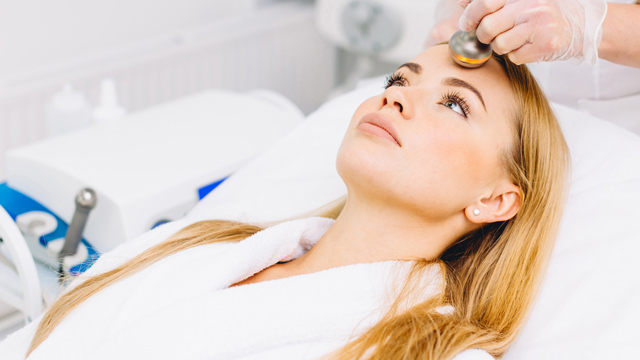
- Ultherapy PRIME® + full skin Botox, or Ultherapy PRIME® + Thermage FLX® as a paired session.
- Intradermal (skin) Botox combined with Titanium Lifting or ONDA Lifting.
- InMode's FX/MiniFX and FORMA handpieces are sometimes used together when both fullness and laxity are concerns.
- Multi-Device Combination Lifting is itself built around pairing two or more of the technologies above (for example HIFU plus RF) within one personalized plan.
- Any combination is planned by the treating physician based on treatment compatibility, timing and the patient's specific concerns — it is not a fixed package.
Safety, Precision, and Clinic Standards
SeouLeaguer Dermatology is a Registered Medical Institution for Attracting Foreign Patients, certified by Korea's Ministry of Health and Welfare under the Act on Support for Overseas Expansion of Medical Services and Attraction of International Patients (Foreign Patient Attraction Registration No. M-2020-01-58584; business registration no. 356-07-00256). Consultation, treatment and follow-up for this specialty are specialist-led, with device settings customized to each patient's skin condition, elasticity and facial structure rather than applied uniformly. Several of the technologies offered — including microfocused-ultrasound and radiofrequency aesthetic devices of the type used for Ultherapy PRIME® and Thermage FLX® — belong to device categories that have gone through U.S. FDA 510(k)/De Novo clearance review for non-invasive skin-tightening and lifting indications; patients considering treatment in any market should ask their clinic which specific device model and indication applies, since clearance details vary by model and by regulatory jurisdiction. As with any energy-based aesthetic treatment, risks include temporary redness, swelling, bruising, altered sensation and, less commonly, burns or pigmentation change if settings or technique are inappropriate — your physician will review these against your individual skin type at consultation.
Before any of these technologies is used, the clinic's physicians review the patient's medical history, including implanted electrical or metallic devices, pregnancy, previous facial procedures, fillers, medications, tattoos or permanent makeup in the treatment area, and any active skin conditions — several of the individual technology profiles list these specifically as reasons to postpone or avoid treatment. Patients are also asked about allergies and any history of abnormal scarring or healing. Aftercare instructions are given per technology but commonly include gentle cleansing, avoiding excessive rubbing or pressure on the treated area, sun protection, and temporarily avoiding heat exposure, saunas or strenuous exercise until the skin has settled. Patients are asked to contact the clinic if they notice blistering, severe pain or persistent skin changes after treatment, rather than waiting for a scheduled follow-up. This category of treatment is positioned, consistently across the technologies offered, as producing a temporary improvement in appearance of laxity and firmness rather than a permanent change — skin continues to age after treatment, and maintenance sessions are commonly discussed as part of a longer-term plan.
The Bottom Line
- Non-surgical facial lifting and skin tightening improves mild-to-moderate laxity and firmness without surgical incisions, using ultrasound, radiofrequency, laser or thread-based technologies.
- SeouLeaguer Dermatology offers thirteen such technologies, selected individually at consultation rather than as a one-size protocol.
- Results build gradually over months, not instantly, and are not equivalent to a surgical facelift for advanced sagging.
- Downtime is generally short (days, not weeks) but varies by the specific technology chosen.
- Candidacy, device selection and combination planning are handled by the clinic's dermatologists and plastic surgeon together.
Frequently Asked Questions
**Is non-surgical facial lifting painful?**Discomfort varies by device and individual sensitivity. Most of these treatments are performed without general anesthesia, and patients commonly describe warmth, pressure or brief discomfort during energy delivery rather than significant pain.**How long is the recovery?**Most protocols in this category involve roughly 3–5 days of mild redness, swelling or tenderness, though several newer technologies (Oligio, Shurink Universe, Titanium Lifting, InMode, Diamond Line Lifting) are generally described as lower-downtime, with many patients returning to routine activity the same day.**When will I see results, and how long do they last?**Because these treatments work by stimulating collagen remodeling rather than repositioning tissue surgically, visible improvement typically develops over about 2–6 months. Reported longevity ranges from roughly 3–6 months up to about 2 years depending on the technology and the patient's skin.**How do I choose between thirteen different technologies?**You don't choose alone — the consultation assesses your degree of laxity, its location, your skin quality and your goals, and the clinic's specialists recommend a device (or combination) suited to that assessment. Several patients receive a single technology; others are suited to a multi-device plan.**How many days should I plan to stay in Seoul for this treatment?**For most non-invasive energy-based lifting in this category, 1–2 days in Seoul is generally sufficient, including a follow-up check. Patients who want observation for swelling or tenderness, or who are combining several sessions, may choose to stay longer.**Can this replace a surgical facelift?**No. These technologies are intended for mild-to-moderate laxity. Patients with severe skin excess or advanced sagging are typically advised that a non-surgical option will not produce facelift-level results, and a surgical consultation may be the more appropriate next step.**What should I avoid before treatment?**Before any of these treatments, patients are generally asked to tell the physician about implanted electrical devices, facial implants or fillers, medications, active skin conditions and previous facial procedures, and to follow the clinic's specific instructions on skincare and sun exposure ahead of the appointment.How does the clinic reduce risk across so many different devices? Each technology is paired with a pre-treatment medical history review and a consultation that assesses skin laxity, facial anatomy and contraindications specific to that device, rather than a single generic intake used for every technology. Settings and treatment depth are adjusted to the individual rather than fixed.
Book a Consultation at SeouLeaguer Dermatology
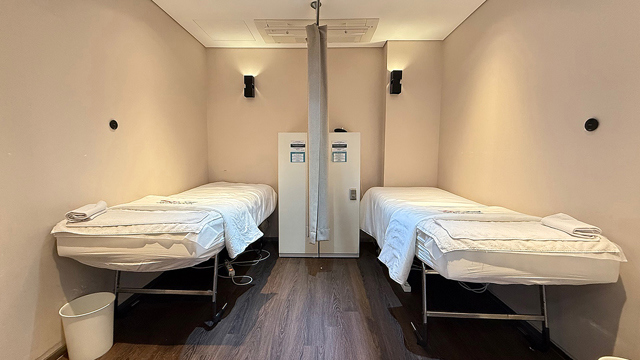
To find out which of these thirteen non-surgical lifting and tightening options fits your skin and goals, book a consultation with SeouLeaguer Dermatology's dermatology and plastic surgery team in Gangnam, Seoul, through the clinic's contact page.
Disclaimer
This page is for general informational purposes only and does not constitute medical advice. Individual results vary, and a qualified physician should assess your suitability for any treatment described here before proceeding.
Sources & Further Reading
Related Services
Procedures available within our clinical departments.

Pico Fraxel
Pico Fraxel is a fractional laser treatment that delivers controlled laser energy to the skin to improve enlarged pores, uneven skin texture, acne-scar appearance, pigmentation, and overall skin quality.
Learn More

ONDA Lifting (Microwave Facial Contouring)
ONDA Lifting uses targeted microwave energy to improve skin firmness and contours through personalized treatment settings.
Learn More
CO2 Laser
CO2 laser treatment uses carbon dioxide laser energy to precisely remove or heat targeted layers of the skin.
Learn More