Personalized Medical Care & Dedicated International Patient Concierge

Acne & Scar Treatment · Needs Clinic Confirmation
Chemical Peel Treatment
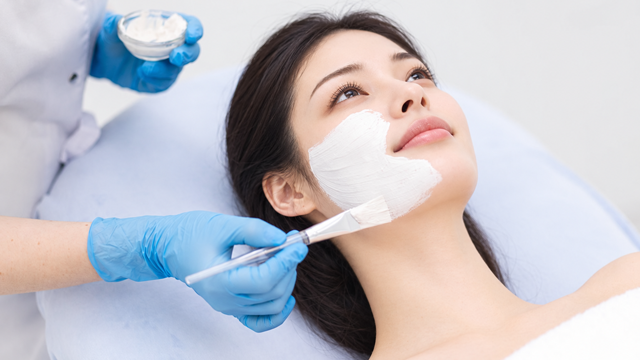
Chemical Peel Treatment uses a chemical solution to exfoliate damaged surface layers of skin, promoting renewal and improving superficial acne marks, uneven tone, and rough texture.
Schedule a ConsultationChemical Peel Treatment
Medically reviewed by Dr. Lee Jung Hoon and Dr. Kim Sung Wook (board-certified dermatologists), SeouLeaguer Dermatology, Seoul
What Is Chemical Peel Treatment?
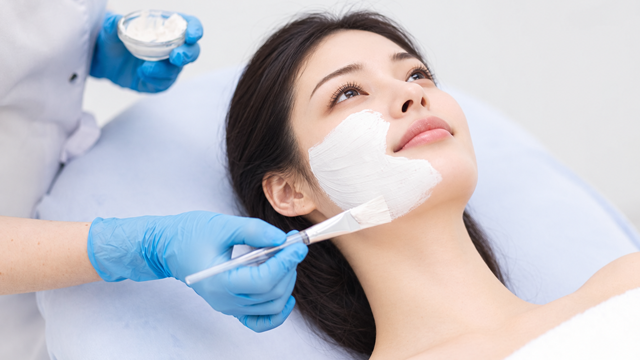
Chemical Peel Treatment uses a chemical solution to exfoliate damaged surface layers of skin, promoting renewal and improving superficial acne marks, uneven tone, and rough texture. The specific peel type and strength are selected according to the patient's skin tone, sensitivity, and the particular concern being addressed, rather than a single universal peel applied to every patient.
Chemical peels work by controlled removal of outer skin layers, prompting the skin underneath to regenerate with a smoother, more even appearance. Different peel formulations penetrate to different depths and are suited to different concerns — some are gentle enough for frequent, superficial use aimed at general skin clarity, while others penetrate more deeply and are reserved for more significant tone or texture irregularities, generally requiring more recovery time and more careful patient selection.
The depth of a given peel formulation is one of the main variables the treating physician weighs when selecting an approach for a particular patient. A superficial peel removes only the outermost layer of skin cells and is generally well tolerated with minimal visible downtime, making it a reasonable option for patients who want gradual improvement without disrupting their regular schedule, including many international patients who do not want their trip built around a longer recovery period. A medium-depth peel reaches further into the skin and can address more noticeable tone and texture irregularities, but typically comes with several days of visible peeling and requires more deliberate planning around the recovery window. Deep peels, which penetrate furthest, are reserved for more significant concerns and require the most careful patient selection, since they carry correspondingly higher risks and a longer recovery period.
Patients sometimes arrive already familiar with peels from previous experience, whether from a dermatology clinic, a medical spa, or an at-home kit, and want simply a stronger version of what they have already tried. The clinic's physicians generally start by reviewing what formulation and strength were used previously and how the skin responded, since this history is often more informative than the patient's own description of the peel's name or marketed strength, which can vary between brands and providers even when the labels sound similar.
How Chemical Peel Treatment Compares to Other Options
Chemical Peel Treatment provides broader, more generalized surface renewal compared with the more targeted techniques used in Acne Scar Treatment or Post-Acne Redness Treatment, which are suited to more defined depressed scars or distinct vascular redness. Compared with Skin Scaling, which is a gentler, non-chemical exfoliation method, Chemical Peel Treatment can achieve a deeper level of renewal depending on the peel selected, though with correspondingly more downtime for stronger formulations. For active acne, Chemical Peel Treatment can play a supporting role within an Acne Treatment plan but is not generally the primary approach for significant active inflammation.
Who Performs Chemical Peel Treatment at SeouLeaguer Dermatology
Dr. Lee Jung Hoon


Dr. Kim Sung Wook
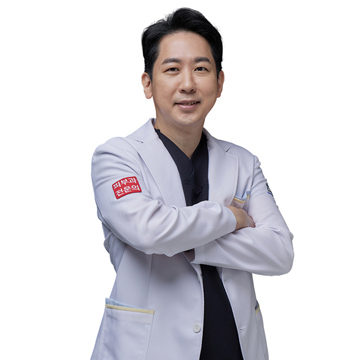
Chemical Peel Treatment sits under SeouLeaguer Dermatology's own specialty grouping, where candidacy assessment and treatment planning are shared by the clinic's three specialists: Dr. Lee Jung Hoon (board-certified dermatologist, Chief Director, 24+ years of practice), Dr. Kim Sung Wook (board-certified dermatologist, 29+ years of experience, professor of dermatology at the Catholic University of Korea), and Dr. Choi Hang Seok (board-certified plastic surgeon, residency at Seoul St. Mary's Hospital, The Catholic University of Korea). The treating dermatologist selects peel type and strength according to skin tone, sensitivity, and the specific concern, reviewing medical history and any active skin conditions beforehand.
Who Is a Good Candidate for Chemical Peel Treatment?
- Patients with superficial acne marks, uneven tone, or rough texture seeking a non-laser exfoliating option.
- Patients looking for a lower-downtime option compared with more intensive resurfacing procedures, depending on the peel strength selected.
- People who are pregnant or have certain active skin conditions, infections, or allergies relevant to peel ingredients may need to postpone or select a different formulation.
- Patients willing to follow sun protection and skincare instructions closely afterward, since peeled skin is temporarily more sensitive to ultraviolet exposure.
- Patients who understand that stronger, deeper peels generally require more careful selection and a longer recovery window, and who are willing to discuss which depth genuinely matches their concern and schedule rather than requesting the strongest available option by default.
- Patients without active cold sores, open wounds, or significant skin barrier compromise in the treatment area at the time of the procedure.
Skin tone is an important factor in peel selection, since certain peel formulations carry a higher relative risk of post-treatment pigmentation changes in darker skin tones. This does not exclude patients with darker skin tones from this service, but it does mean the physician selects formulation and strength with that consideration specifically in mind rather than using one default approach across all skin tones.
What to Expect: Procedure, Recovery, and Results Timeline
| Stage | What typically happens |
|---|---|
| Consultation | Skin tone, sensitivity, and the specific concern are assessed to select an appropriate peel type and strength. |
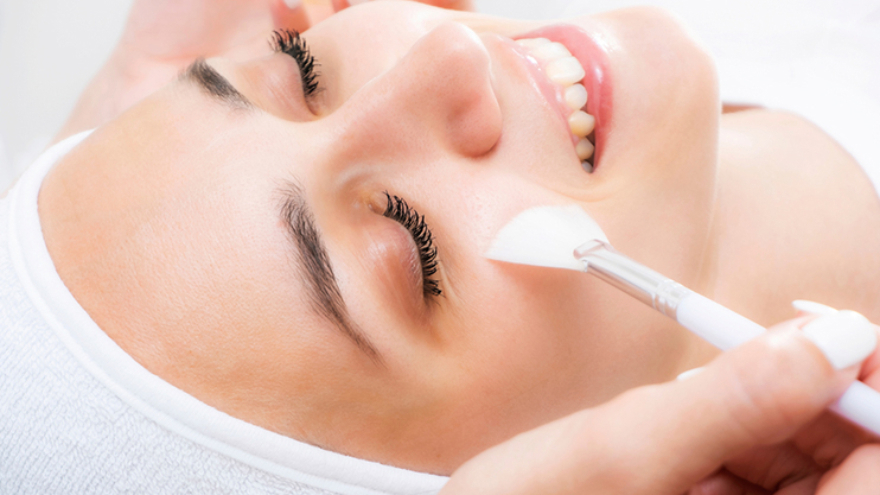
| Procedure | A chemical solution is applied to the skin for a controlled period, then neutralized or removed according to the specific formulation used. |
| Immediate aftermath | Temporary redness, tightness, or a warm or tingling sensation is common; stronger peels may produce visible peeling over the following days. |
| Recovery | Generally brief for superficial peels, with little to no visible downtime; deeper peels may involve several days of peeling and sensitivity. |
| Results timeline | Improvement often becomes more visible over the first one to two weeks as the skin renews, with a course of multiple sessions typically producing more noticeable cumulative improvement. |
Preparation generally involves avoiding certain active skincare ingredients and excessive sun exposure beforehand, and disclosing current medications, allergies, and any active skin conditions. Aftercare typically includes gentle cleansing, diligent sun protection, and avoiding picking at any peeling skin, which can affect how evenly the skin heals.
For international patients planning their trip around this service, the practical question is usually how many days of visible peeling to build into the itinerary. For superficial peels, this is often minimal or not noticeable at all, meaning a session can be scheduled without materially affecting the rest of a trip. For medium-depth peels, planning several days of lower-profile activity afterward is generally advisable, since visible flaking is common during that window even though it is a normal and expected part of the healing process rather than a sign of a problem. The clinic can help plan peel scheduling around the rest of an itinerary once the appropriate depth has been determined at consultation.
Patients are sometimes tempted to pick at or manually remove peeling skin to speed up the process, and the clinic's physicians consistently advise against this, since peeling skin that is pulled away before it is ready can leave the underlying, not-yet-fully-healed skin exposed, increasing the risk of irritation, uneven healing, or pigmentation changes in that specific area. Letting the skin shed naturally, while following the prescribed aftercare routine, generally produces the most even result.
Combining Chemical Peel Treatment with Other Treatments
- Chemical Peel Treatment may be combined with active acne medication once appropriately spaced to avoid excessive irritation.
- It may also support Acne Scar Treatment or Post-Acne Redness Treatment by improving overall surface tone between more targeted sessions.
- Treatment order and timing between combined procedures should be determined by a qualified clinician rather than assumed by the patient.
Longevity and Maintenance
Because the skin naturally continues to be exposed to the same factors that affected it before treatment — sun exposure, oil production, and ongoing skin turnover — periodic maintenance peels are commonly recommended to sustain results over time rather than a single course being expected to produce permanent, unchanging skin. Consistent sun protection between sessions is particularly important, since unprotected sun exposure can both reverse some of the achieved improvement and increase the risk of new pigmentation.
For international patients who cannot easily return to Seoul for frequent maintenance sessions, the clinic can discuss a realistic long-term plan that may include periodic sessions on future trips, combined with a daily skincare routine designed to support the results between visits. This is generally more practical than attempting to replicate an in-clinic peel at home, since over-the-counter products are formulated at substantially lower strengths for safety reasons and are not a direct substitute for a professionally administered peel.
Patients with naturally oilier skin may find that surface texture and tone concerns recur somewhat faster than patients with drier skin, simply because oil production continues to influence pore congestion and texture on an ongoing basis. This does not mean oilier skin responds less well to treatment, but it can mean that more frequent maintenance sessions are worth discussing for patients in that category specifically.
Safety, Precision, and Clinic Standards
SeouLeaguer Dermatology is a Registered Medical Institution for Attracting Foreign Patients, certified by Korea's Ministry of Health and Welfare under the Act on Support for Overseas Expansion of Medical Services and Attraction of International Patients (Foreign Patient Attraction Registration No. M-2020-01-58584). Depending on peel strength, risks can include temporary redness, irritation, peeling, or, less commonly, pigmentation changes or, with stronger formulations used inappropriately, scarring, which is why peel selection is individualized rather than standardized.
The clinic's physicians assess each patient specifically before treatment, since the appropriate peel type and strength depend on skin tone, sensitivity, and the specific concern being addressed. Patients are encouraged to disclose any history of complications from previous peels or other resurfacing treatments, whether at this clinic or elsewhere, since prior response can meaningfully inform today's selection.
The Bottom Line
- Chemical Peel Treatment uses a chemical solution to exfoliate damaged surface skin and promote renewal.
- Peel type and strength are selected individually according to skin tone, sensitivity, and the specific concern.
- Recovery ranges from minimal for superficial peels to several days of peeling for deeper formulations.
- A course of multiple sessions typically produces more noticeable cumulative improvement than a single peel.
Frequently Asked Questions
**What exactly is Chemical Peel Treatment at SeouLeaguer Dermatology in Seoul?**It is an exfoliating treatment using a chemical solution to remove damaged surface skin layers and promote smoother, more even renewal, with peel type and strength selected individually.**Is Chemical Peel Treatment safe for international patients visiting Seoul?**Yes, Chemical Peel Treatment can be performed safely for eligible international patients following an individualized skin assessment at SeouLeaguer Dermatology.**How much downtime does a chemical peel require?**This depends on the peel strength selected — superficial peels generally involve little to no visible downtime, while deeper peels may require several days of peeling and sensitivity.**How many sessions are usually needed?**A course of multiple sessions typically produces more noticeable cumulative improvement than a single peel, with the specific number depending on the concern and peel strength used.**Does SeouLeaguer Dermatology offer Chemical Peel Treatment for international patients?**Yes, SeouLeaguer Dermatology offers Chemical Peel Treatment for international patients, with care led by the clinic's board-certified doctors and consultations available in English.**Can Chemical Peel Treatment be used while I still have some active acne?**It can sometimes be incorporated as a supporting element of an Acne Treatment plan, but the appropriate peel strength and timing depend on how active the acne currently is, which the physician assesses individually.**Is there a difference between a clinic peel and an at-home peel kit?**Yes — professionally administered peels are generally formulated at higher strengths and applied under direct clinical supervision, which allows for more significant results than most over-the-counter kits, which are limited to lower strengths for general safety.Will I need to avoid the sun completely after a peel? Complete avoidance is not usually required, but diligent sun protection, including sunscreen and limiting direct exposure, is important while the skin renews, since peeled skin is more vulnerable to sun-related pigmentation during that window.
Patients traveling for other procedures during the same trip sometimes ask whether a peel can be added on as a quick extra at the end of their visit. The physician reviews this on a case-by-case basis, since a peel performed too close to another procedure, particularly one involving the same treatment area, can increase overall irritation; spacing the two appropriately, even if that means scheduling the peel for a later point in the trip or a future visit, is generally the safer approach.
Book a Consultation at SeouLeaguer Dermatology
Looking for a gentler way to improve uneven tone and lingering acne marks? Book a consultation with SeouLeaguer Dermatology's dermatology team in Gangnam, Seoul, to discuss Chemical Peel Treatment.
Disclaimer
This page is for general informational purposes only and does not constitute medical advice. Individual results vary by skin tone and peel type, and a qualified physician should assess your suitability for any treatment described here before proceeding.
Sources & Further Reading
Other Services
Explore additional treatments offered by our specialists.

Pico Fraxel
Pico Fraxel is a fractional laser treatment that delivers controlled laser energy to the skin to improve enlarged pores, uneven skin texture, acne-scar appearance, pigmentation, and overall skin quality.
Learn More

ONDA Lifting (Microwave Facial Contouring)
ONDA Lifting uses targeted microwave energy to improve skin firmness and contours through personalized treatment settings.
Learn More
CO2 Laser
CO2 laser treatment uses carbon dioxide laser energy to precisely remove or heat targeted layers of the skin.
Learn More