Personalized Medical Care & Dedicated International Patient Concierge


Specialty Overview
Hair Loss Treatment
Diagnosis-based hair loss treatment at SeouLeaguer Dermatology in Gangnam, Seoul — Scalp & Hair Follicle Injection Therapy and PRP Hair Restoration, reviewed by board-certified dermatologists.
Schedule a ConsultationHair Loss Treatment

Medically reviewed by Dr. Lee Jung Hoon, Dr. Kim Sung Wook (board-certified dermatologists) and Dr. Choi Hang Seok (board-certified plastic surgeon), SeouLeaguer Dermatology, Seoul
Hair Loss Treatment at SeouLeaguer Dermatology is a diagnosis-based approach for reducing hair shedding, slowing hair loss and supporting hair growth, with the specific treatment plan depending on the underlying cause rather than a single standard protocol applied to every patient.
What Is Hair Loss Treatment?
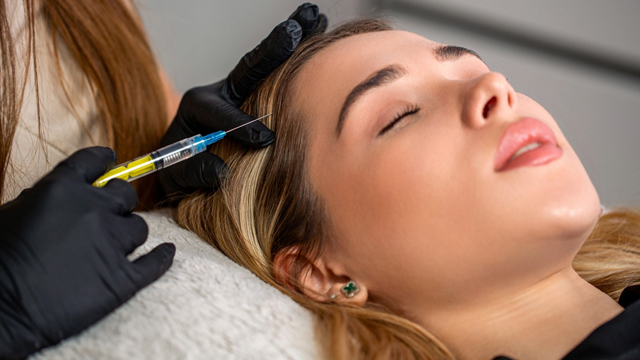
Hair loss has several distinct underlying causes — patterned (androgenetic) hair loss, diffuse thinning, excessive shedding, and various scalp conditions can all present to a patient as simply "losing hair," yet each responds to a different treatment approach. Depending on the diagnosis, treatment at SeouLeaguer Dermatology may include prescription or topical medications and, when appropriate, regenerative or device-based procedures such as scalp injection therapy or platelet-rich plasma (PRP) treatment. Early diagnosis matters because it can help identify an appropriate treatment before significant follicle miniaturization or permanent loss occurs, which is part of why the clinic emphasizes diagnosis before any specific product or procedure is selected.
International patients request hair loss evaluation and treatment for patterned hair loss, diffuse thinning, excessive shedding, or other scalp-related concerns. Korean dermatology practice in this area combines established medical treatment with selected adjunctive procedures chosen according to the type and severity of hair loss presented.
Patients sometimes arrive at consultation already having tried an over-the-counter product or a treatment advertised online without first getting a diagnosis, and are surprised to learn that their specific pattern of thinning does not match what that product is designed to address. Androgenetic alopecia, the most common cause of patterned hair loss in both men and women, behaves differently from diffuse telogen effluvium (shedding triggered by stress, illness, nutritional deficiency, or hormonal change), and both are different again from scalp conditions that cause localized hair loss through inflammation or scarring. Because the visible symptom — thinning or shedding hair — looks broadly similar across these causes, the clinic's diagnostic process exists specifically to separate them before any treatment is recommended, rather than assuming the most commonly advertised cause applies to every patient who walks in with a hair-loss concern.
- Mechanism: varies by diagnosis — topical or oral medication, injectable scalp treatment, PRP, or a combination, each targeting a different biological driver of hair loss.
- Positioned for patients with diagnosed androgenetic alopecia, diffuse thinning, excessive shedding, or other treatable scalp and hair conditions.
- Anesthesia needs vary: medication-based treatment generally requires none, while injectable or device-based scalp treatments may use local or topical numbing depending on technique.
- Results generally require sustained treatment over months rather than appearing quickly, and can diminish if treatment is stopped — a point the clinic is explicit about rather than implying a one-time fix.
Who Performs Hair Loss Treatment at SeouLeaguer Dermatology
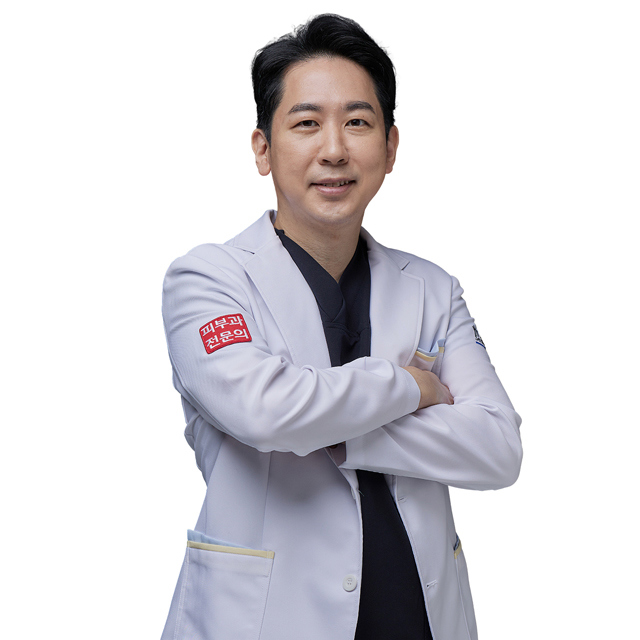
Dr. Lee Jung Hoon, Chief Director Board-certified Dermatologist Dr. Kim Sung Wook
Board-certified Dermatologist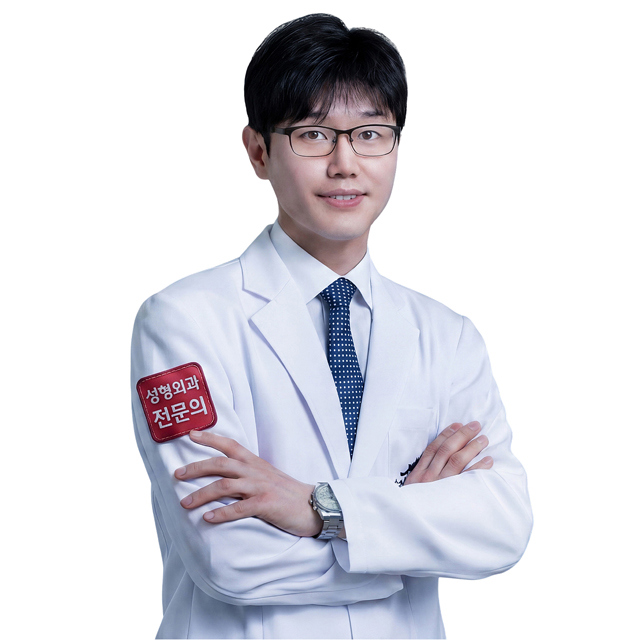 Dr. Choi Hang Seok
Board-certified Plastic Surgeon
Hair Loss Treatment sits under SeouLeaguer Dermatology's own specialty grouping, where candidacy assessment and treatment planning are shared by the clinic's three specialists: Dr. Lee Jung Hoon (board-certified dermatologist, Chief Director, 24+ years of practice), Dr. Kim Sung Wook (board-certified dermatologist, 29+ years of experience, professor of dermatology at the Catholic University of Korea), and Dr. Choi Hang Seok (board-certified plastic surgeon, residency at Seoul St. Mary's Hospital, The Catholic University of Korea). The clinician reviews the pattern and duration of hair loss, family history, medical conditions, medications and previous treatments, with scalp and hair examination performed and additional tests considered when the cause is unclear. Hair-loss classification helps assess the distribution and severity of patterned loss before any medication or procedure is recommended.
Hair Loss Treatment Options Available
SeouLeaguer Dermatology offers two procedure-based services under this specialty, both positioned as options that may be used alongside, rather than instead of, established medical therapy where appropriate.
| Service | Typical focus | Mechanism detail |
|---|---|---|
| Scalp & Hair Follicle Injection Therapy | Thinning hair, reduced hair density | Selected substances injected into the scalp or around hair follicles to support scalp condition and hair density |
| PRP Hair Restoration | Early-to-moderate thinning, hairline recession, weakened follicles | Concentrated growth factors from the patient's own blood plasma injected to stimulate dormant follicles |
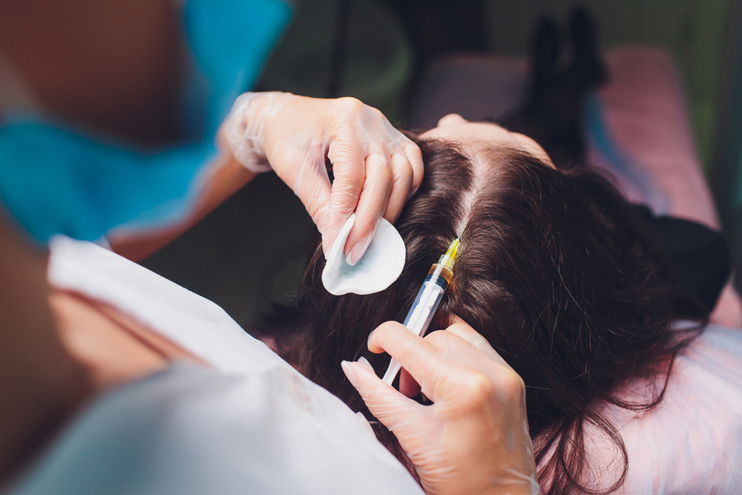
**Scalp & Hair Follicle Injection Therapy.**This service delivers a selected injectable product into the scalp or around hair follicles. Depending on the specific product and protocol chosen, it may be used to support scalp condition, hair density, or the appearance of thinning hair, and is positioned as a minimally invasive option for patients who prefer not to pursue surgery or a long recovery period.PRP Hair Restoration. This service processes a small sample of the patient's own blood to isolate its platelet-rich component, then injects that concentrated plasma into thinning areas of the scalp with the aim of waking up follicles that are dormant but still alive, and improving the blood supply those follicles rely on. It suits patients whose thinning is early-to-moderate — a receding hairline, a thinning crown, or follicles that have weakened but not yet switched off — since PRP cannot be expected to bring back follicles that have already become completely inactive or severely damaged.
Both services are generally discussed as adjuncts to a broader hair-loss treatment plan rather than universal replacements for established medical therapy such as topical minoxidil or, for appropriate male patients, oral finasteride. The treating physician determines at consultation whether one of these procedures, established medication, or a combination of approaches best fits a given patient's diagnosis.
Patients sometimes ask which of the two procedure-based services is simply "better," expecting a straightforward ranking. The clinic's physicians generally decline to answer that question in the abstract, because the two services are not competing solutions to the same problem so much as different tools suited to somewhat different situations — PRP Hair Restoration specifically requires follicles that are still biologically active, since it works by stimulating dormant but living follicles rather than reviving ones that have already stopped functioning, while Scalp & Hair Follicle Injection Therapy covers a broader range of injectable approaches to scalp condition and hair density that may suit patients at a different stage of thinning. Establishing which situation actually applies to a given patient is, again, a function of the diagnostic step rather than something a patient can reliably judge for themselves from how their hair looks in a mirror.
Who Is a Good Candidate for Hair Loss Treatment?
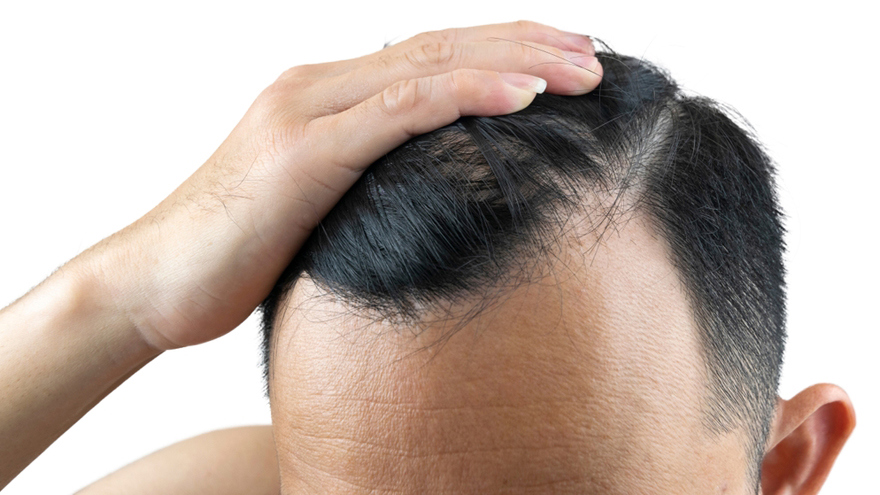
- People with diagnosed androgenetic alopecia, diffuse thinning, excessive shedding, or other treatable scalp and hair conditions.
- Patients who want their hair loss properly diagnosed before starting any medication or procedure, rather than self-selecting a treatment based on marketing claims.
- Patients with unexplained sudden hair loss, an active scalp infection, or significant inflammation may require further diagnosis or treatment before a hair-growth procedure is appropriate.
- Some medications or procedures may be unsuitable for certain medical conditions or during pregnancy, which the treating physician reviews individually.
What to Expect: Procedure, Recovery, and Results Timeline
| Stage | What typically happens |
|---|---|
| Consultation | The clinician goes over the pattern and duration of hair loss alongside family history, medical conditions, medications and any prior treatments, examines the scalp, and orders additional testing if the cause isn't yet clear. |
| Procedure | Depends on diagnosis: medication prescribed, or an injectable/device-based scalp treatment performed with local or topical numbing as appropriate. |
| Duration | Consultation and diagnosis are usually completed during a single outpatient visit; procedure duration varies by the specific treatment selected. |
| Immediate aftermath | Medication-based treatment generally has no procedural recovery; injectable or device-based treatment may cause temporary scalp tenderness, redness or swelling. |
| Recovery | Varies by treatment selected; most patients resume normal activities quickly after an injectable or device-based session. |
| Results timeline | Hair-growth treatments generally require consistent use over months rather than producing immediate results; minoxidil commonly takes about 6 to 12 months to assess regrowth. |
| Longevity | Benefits generally depend on continued treatment and can diminish after stopping, which the clinic states plainly rather than implying a permanent one-time result. |
Before any treatment, patients are asked to share medical conditions, medications, allergies, previous hair-loss treatments, pregnancy or breastfeeding status where applicable, and recent scalp procedures. Aftercare follows prescribed medication instructions and scalp-care recommendations, and for injectable or device-based treatment includes guidance on washing, rubbing, exercise and heat exposure, along with attending follow-up appointments to assess how the treatment is working and whether any adjustment to the plan is needed.
Because hair-loss treatment is diagnosis-dependent, the clinic is explicit that results vary by the underlying cause and by how consistently a patient follows the prescribed plan. Approved claims for this specialty include assessment and treatment of hair loss, reduction of hair shedding, maintenance of existing hair, and support for regrowth in suitable patients — the clinic does not promise guaranteed regrowth, permanent results, complete reversal of baldness, or identical results for every patient, since hair-loss response is inherently variable between individuals.
This variability is also why the clinic generally recommends against judging a hair-loss treatment's success too early. Because hair grows in cycles, and because shedding that started months before a visit was already set in motion by biological processes that a new treatment cannot instantly reverse, a patient who does not see an obvious difference at the one-month or even three-month mark has not necessarily had an unsuccessful treatment — the typical assessment points described in the results timeline below reflect how long the biology genuinely takes, not an arbitrary waiting period imposed by the clinic. Patients who stop treatment early because they have not yet reached that assessment point are, in effect, evaluating the treatment before it has had the chance to work.
Combining Hair Loss Treatment with Other Treatments
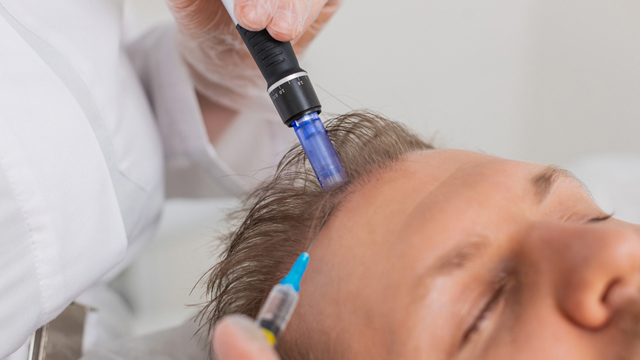
- Scalp & Hair Follicle Injection Therapy and PRP Hair Restoration may each be combined with established medical therapy such as topical minoxidil or oral finasteride when clinically appropriate.
- PRP Hair Restoration is frequently combined with scalp microneedling, low-level laser light therapy, or topical growth serums to boost follicle stimulation.
- Treatment may combine medication with selected adjunctive procedures when a patient's diagnosis supports more than one approach at once.
- Any combination is planned individually by the treating physician based on diagnosis, goals and appropriate spacing between treatments — it is not offered as a fixed package.
- Patients visiting from abroad who hope to fit hair-loss treatment into a broader Seoul trip should mention this goal when first booking, since an accurate diagnosis and a realistic multi-month treatment plan are not things a single visit can fully resolve on its own.
Safety, Precision, and Clinic Standards
SeouLeaguer Dermatology is a Registered Medical Institution for Attracting Foreign Patients, certified by Korea's Ministry of Health and Welfare under the Act on Support for Overseas Expansion of Medical Services and Attraction of International Patients (Foreign Patient Attraction Registration No. M-2020-01-58584). Risks depend on the treatment selected: medication-related effects vary by drug, while scalp injections or device-based treatments may cause temporary pain, redness, swelling or irritation. Hair loss itself may also continue if the underlying condition is progressive, which is part of why ongoing monitoring and follow-up are built into the treatment plan rather than treatment being a single isolated visit.
Because suitability depends heavily on the underlying cause, the clinic's physicians review each patient's medical history, medications, allergies, pregnancy or breastfeeding status, and any active scalp infection or significant inflammation before recommending medication or a procedure, and will decline or postpone treatment where a contraindication applies. Patients with unexplained sudden hair loss are generally referred for further diagnosis before a hair-growth procedure is considered, since sudden hair loss can reflect causes — thyroid or other systemic conditions, for instance — that a hair-restoration procedure would not address, and that instead need their own separate medical evaluation first.
Patients traveling from abroad specifically for hair-loss treatment should understand that meaningful results generally take months rather than appearing during a single trip. The clinic generally recommends treating an initial Seoul visit as the start of a diagnosis-and-treatment process to be continued and assessed over time, including through remote follow-up where appropriate, rather than expecting a finished result before departure.
This travel reality shapes how the clinic structures a first visit for international patients specifically. Rather than attempting to deliver a complete, finished course of treatment in one trip — which the underlying biology does not really allow regardless of how the visit is planned — the physicians generally aim to use the first visit to establish a confirmed diagnosis, begin whichever treatment is appropriate, and set clear expectations for how the patient's progress should be monitored afterward. Any oral medication prescribed is something the patient's home-country physician may need to help continue or monitor, and the clinic is generally willing to discuss how it can support that continuity of care through documentation that a receiving physician can review, even though it cannot directly manage long-term prescribing once the patient has returned home.
The Bottom Line
- Hair Loss Treatment is diagnosis-based: the appropriate approach depends on whether the cause is patterned loss, diffuse thinning, excessive shedding, or another scalp condition.
- SeouLeaguer Dermatology offers two procedure-based services — Scalp & Hair Follicle Injection Therapy and PRP Hair Restoration — generally positioned as adjuncts to established medical therapy.
- Results require sustained treatment over months and are not guaranteed, promised as permanent, or expected to be identical between patients.
- The clinic's board-certified dermatologists tailor candidacy and treatment planning to each patient's diagnosis, rather than following one protocol regardless of what is actually causing the hair loss.
Frequently Asked Questions
**What is Hair Loss Treatment at SeouLeaguer Dermatology?**It is a diagnosis-based approach to reducing hair shedding, slowing hair loss and supporting hair growth, with the specific plan depending on the underlying cause.**Is Hair Loss Treatment safe for international patients?**Yes, hair-loss evaluation and treatment can be performed safely for eligible international patients following an individualized diagnosis and review at SeouLeaguer Dermatology.**How long do I need to stay in Korea for hair loss treatment?**Consultation and diagnosis are usually completed in a single outpatient visit, but meaningful hair-regrowth results take months to develop, so many patients plan for remote follow-up after returning home.**What does recovery look like after hair loss treatment?**Medication-based treatment generally has no procedural recovery; injectable or device-based treatments may cause brief scalp tenderness, redness or swelling for a day or two.**Does SeouLeaguer Dermatology offer Hair Loss Treatment for international patients?**Yes, with diagnosis and care led by the clinic's board-certified dermatologists, and English-language consultation available throughout.Can Hair Loss Treatment be combined with other treatments? Yes, commonly with established medication such as minoxidil or finasteride, or with scalp microneedling and low-level laser therapy — planned individually at consultation.
Book a Consultation at SeouLeaguer Dermatology

To find out whether Scalp & Hair Follicle Injection Therapy or PRP Hair Restoration fits your diagnosis, Book a consultation with SeouLeaguer Dermatology's dermatology and plastic surgery team in Gangnam, Seoul.
Disclaimer
This page is for general informational purposes only and does not constitute medical advice. Individual results vary considerably, and a qualified physician should assess your suitability for any treatment described here before proceeding.
Sources & Further Reading
Related Services
Procedures available within our clinical departments.

Botox Injections for Wrinkles
Botox Injections for Wrinkles target the specific facial muscles whose repeated contraction, over years of expression, creates dynamic wrinkles.
Learn More

Oxygen Detox Care
Oxygen Detox Care is a non-invasive skin-care treatment designed to refresh and hydrate the skin using an oxygen-focused care method.
Learn More
Hyaluronic Acid Filler
Hyaluronic Acid Filler restores facial volume, smooths lines and folds, and enhances facial contours through minimally invasive injections.
Learn More