Personalized Medical Care & Dedicated International Patient Concierge


Skin Booster & Rejuvenation Care · Needs Clinic Confirmation
Vitamin Skin Care
Vitamin Skin Care is a skin treatment using highly concentrated vitamin C delivered into the skin through iontophoresis, a technique the clinic refers to by the name Vialont.
Schedule a ConsultationVitamin Skin Care

Medically reviewed by Dr. Lee Jung Hoon and Dr. Kim Sung Wook (board-certified dermatologists), SeouLeaguer Dermatology, Seoul
What Precisely And Specifically Is Vitamin Skin Care?
Vitamin Skin Care is a skin treatment using highly concentrated vitamin C delivered into the skin through iontophoresis, a technique the clinic refers to by the name Vialont. Vitamin C is easily oxidized and can be difficult to deliver effectively into skin cells through topical application alone, and the ionized vitamin C approach used in this treatment is designed to help the active ingredient penetrate more effectively than a standard topical serum.
Among the ten services offered under this specialty, Vitamin Skin Care is distinctive in that it specifically targets pigmentation-related concerns — uneven skin tone, freckles, spots, and dullness — rather than focusing primarily on hydration or structural elasticity the way several of the other services do. This makes it the clinic's main pigmentation-focused option within the Skin Booster & Rejuvenation Care specialty, positioned somewhat differently from hydration-first services such as Water Light or Moisture Care.
Iontophoresis works by using a mild electrical current to help drive charged ionized molecules, in this case vitamin C, deeper into the skin than passive diffusion alone would achieve. This is a non-invasive delivery method — no needles are involved — which distinguishes Vitamin Skin Care from several of the injectable services offered elsewhere under this specialty, while still allowing for deeper penetration than a topical vitamin C serum applied without this assistance.
Patients sometimes ask why vitamin C specifically is used for pigmentation rather than other active ingredients. Vitamin C is a well-studied antioxidant with a long history of use in dermatology for brightening and evening skin tone, generally understood to work by interfering with the process that produces excess pigment in the skin and by supporting the skin's own defense against further pigment-triggering damage from environmental exposure. The challenge with vitamin C has traditionally been stability and effective delivery, since the molecule oxidizes readily once exposed to air and does not easily cross the skin's natural barrier in a standard topical formulation.
This is precisely the problem the Vialont iontophoresis approach is designed to address. By ionizing the vitamin C and using a mild electrical current to drive it through the skin's surface, the treatment aims to deliver a meaningfully higher concentration of active vitamin C into the deeper skin layers than would otherwise be achievable, without requiring an injection or a skin-penetrating device. For patients who specifically want to avoid needles but are seeking a more potent pigmentation treatment than a standard skincare serum can offer, this positions Vitamin Skin Care as a reasonable middle option between topical skincare and more invasive pigmentation treatments such as certain lasers.
How Vitamin Skin Care Compares to Other Options
Compared with Lala Peel, which uses a chemical peeling solution to address similar pigmentation and dullness concerns through surface exfoliation, Vitamin Skin Care works through active ingredient delivery rather than removal of surface skin cells, and the two can sometimes be used as complementary approaches for a patient with persistent pigmentation. Compared with Water Light or Regeneration Care, which are focused on hydration and elasticity respectively, Vitamin Skin Care is distinctly pigmentation-oriented and would not be the primary choice for a patient whose main concern is dryness or firmness rather than tone.
Who Performs Vitamin Skin Care at SeouLeaguer Dermatology

Dr. Lee Jung Hoon

Dr. Choi Hang Seok

Dr. Kim Sung Wook
Vitamin Skin Care sits under SeouLeaguer Dermatology's own specialty grouping, where candidacy assessment and treatment planning are shared by the clinic's three specialists: Dr. Lee Jung Hoon (board-certified dermatologist, Chief Director, 24+ years of practice), Dr. Kim Sung Wook (board-certified dermatologist, 29+ years of experience, professor of dermatology at the Catholic University of Korea), and Dr. Choi Hang Seok (board-certified plastic surgeon, residency at Seoul St. Mary's Hospital, The Catholic University of Korea). The clinician assesses the patient's skin concerns, pigmentation, skin condition, medical history, and treatment expectations before deciding whether Vitamin Skin Care is appropriate.
Who Is a Good Candidate for Vitamin Skin Care?
- Adults with concerns such as uneven skin tone, pigmentation, freckles, spots, or mild fine lines who want to improve tone and brightness rather than address structural volume or firmness.
- Patients specifically seeking a non-invasive, needle-free pigmentation treatment, since iontophoresis does not involve injections.
- Patients needing to postpone treatment if they have active skin infections, significant irritation, open wounds, or other skin conditions affecting the treatment area.
- Patients with realistic expectations that the best results are generally achieved after a sustained course of treatment over at least several months rather than a single session.
Suitability should be confirmed after a professional skin assessment, since pigmentation can arise from several different underlying causes — sun damage, hormonal factors, or post-inflammatory changes among them — and the clinician reviews which of these is most likely driving a given patient's specific pigmentation pattern before confirming this treatment as the right fit.
Patients whose pigmentation is driven primarily by hormonal factors, such as melasma, sometimes require a more carefully managed approach than patients whose pigmentation is purely sun-related, since hormonally driven pigmentation can be more prone to worsening with certain irritating treatments or inadequate sun protection. The physician reviews this distinction carefully at consultation, since it directly affects both candidacy and the realistic expectations set for how much improvement this treatment alone can achieve.
What to Expect: Procedure, Recovery, and Results Timeline
| Stage | What typically happens |
|---|---|
| Consultation | Skin concerns, pigmentation pattern, skin condition, medical history, and treatment expectations are reviewed. |
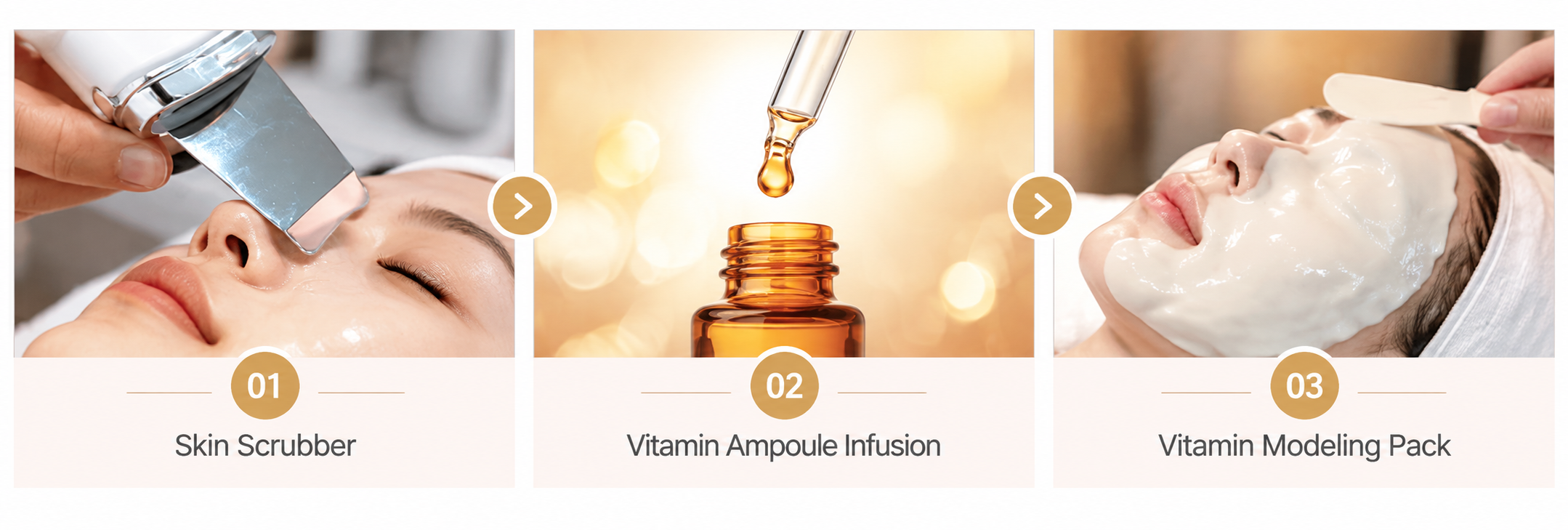
| Procedure | Skin is cleansed and prepared, vitamin C treatment is applied, iontophoresis assists delivery into the skin, and the skin is checked afterward. |
| Immediate aftermath | Temporary redness, sensitivity, irritation, dryness, or mild discomfort can occur, as with many skin treatments. |
| Recovery | Vitamin remains on the skin for 24 hours after treatment; exercise and sauna should generally be avoided during this period. |
| Results timeline | Treatment is generally administered once or twice a week, with the best results typically seen after at least 3 months of treatment, depending on skin type and pigmentation. |
Preparation generally involves arriving with clean skin and informing the clinic about current medications, skincare products, allergies, active skin conditions, and recent cosmetic treatments. Aftercare typically involves keeping the skin clean and moisturized, avoiding excessive sun exposure, using broad-spectrum sunscreen, and avoiding harsh skincare products, exfoliation, strenuous exercise, sauna, and excessive heat for the recommended period. Each session generally takes around 30–40 minutes.
International patients should understand upfront that Vitamin Skin Care is explicitly described by the clinic as a treatment that develops its best results over a sustained course — generally at least 3 months of regular sessions performed once or twice weekly — which is a meaningfully longer commitment than many of the other services on this page. Patients planning a single short trip to Seoul should discuss with the physician whether a shorter course can still produce a worthwhile improvement, or whether this treatment is better suited to patients who can return regularly or extend their stay.
Combining Vitamin Skin Care with Other Treatments
- Vitamin Skin Care may be combined with other non-surgical skin treatments when clinically appropriate, with combinations selected based on skin condition and tolerance and suitable spacing between treatments when needed.
- It is sometimes paired with laser treatment, since the clinic notes that treatment results may be improved when combined in this way.
- Treatment order and timing between combined procedures should be determined by a qualified clinician rather than assumed by the patient.
Longevity and Maintenance
Because Vitamin Skin Care is designed around a sustained treatment course rather than a one-time fix, longevity is closely tied to how consistently the recommended schedule is followed. Patients who complete the full recommended course, generally at least 3 months of once- or twice-weekly sessions, tend to see more durable improvement than those who stop partway through, since the pigmentation-related benefits described by the clinic are explicitly tied to accumulated treatment over this longer timeframe.
For international patients who cannot sustain a weekly in-clinic schedule from home, the clinic can discuss how to plan an intensive initial block of sessions during an extended visit, with maintenance sessions on subsequent trips to Seoul, while supporting ongoing results with consistent sun protection and appropriate topical skincare between visits.
Sun exposure deserves particular emphasis for this specific treatment, since pigmentation is strongly influenced by ultraviolet exposure, and any improvement achieved through a course of Vitamin Skin Care can be meaningfully undermined by inconsistent sun protection afterward. The clinic's physicians generally treat diligent daily sunscreen use as a non-negotiable companion to this treatment rather than an optional suggestion, since without it, new pigmentation can continue forming even while existing pigmentation is being actively treated, effectively working against the treatment's own goal.
Safety, Precision, and Clinic Standards
SeouLeaguer Dermatology is a Registered Medical Institution for Attracting Foreign Patients, certified by Korea's Ministry of Health and Welfare under the Act on Support for Overseas Expansion of Medical Services and Attraction of International Patients (Foreign Patient Attraction Registration No. M-2020-01-58584). Temporary redness, sensitivity, irritation, dryness, or mild discomfort can occur with this treatment; persistent irritation, significant swelling, blistering, or worsening pigmentation should be evaluated by a clinician promptly.
The clinic's physicians assess each patient specifically before treatment, since the appropriate treatment plan depends on the patient's specific pigmentation pattern and skin sensitivity. Patients are encouraged to disclose any history of complications from previous vitamin C, iontophoresis, or pigmentation-focused treatments, whether at this clinic or elsewhere.
The Bottom Line
- Vitamin Skin Care uses concentrated vitamin C delivered via iontophoresis to target pigmentation, freckles, spots, and dullness.
- It is the clinic's main pigmentation-focused, needle-free option among the ten services under this specialty.
- Best results are generally seen after a sustained course of at least 3 months of regular sessions, not a single visit.
- The clinic's physicians always confirm suitability and the underlying cause of pigmentation before recommending this treatment.
Frequently Asked Questions
**What exactly is Vitamin Skin Care at SeouLeaguer Dermatology in Gangnam, Seoul?**It is a non-invasive treatment using concentrated vitamin C delivered via iontophoresis to improve pigmentation, freckles, spots, and dullness.**Is Vitamin Skin Care generally considered safe for international patients traveling to Seoul for this treatment?**Yes, Vitamin Skin Care is generally a low-risk, non-invasive treatment that can be performed safely for most patients following a skin assessment.**How many sessions does Vitamin Skin Care usually require?**Treatment is generally administered once or twice a week, with the best results typically seen after at least 3 months of regular treatment.**What does recovery look like after Vitamin Skin Care?**Recovery is generally minimal; the clinic advises keeping vitamin residue on the skin for 24 hours and avoiding exercise and sauna during that period.**Does SeouLeaguer Dermatology specifically offer Vitamin Skin Care designed around the needs of international patients?**Yes, SeouLeaguer Dermatology offers Vitamin Skin Care for international patients, with care led by the clinic's board-certified doctors and consultations available in English.**Can I see meaningful results from a short trip, or do I need to stay 3 months?**A short course can still provide some improvement, though the clinic is upfront that the best, most durable results generally require the full recommended course; the physician can discuss realistic expectations for a shorter visit.**Will Vitamin Skin Care work for all types of pigmentation?**Not necessarily — pigmentation can arise from different underlying causes, and the physician assesses which pattern a given patient has before confirming whether this treatment, or an alternative, is the better fit.Can I combine Vitamin Skin Care with laser treatment? Yes, the clinic notes that results from Vitamin Skin Care may be improved when combined with laser treatment, with the specific combination and spacing determined by the treating physician.
Patients who have tried topical vitamin C serums at home before without noticing much difference sometimes assume the ingredient itself simply does not work for their skin. The clinic's physicians generally explain that this conclusion is often premature, since the actual concentration reaching the skin's deeper layers from a topical serum, even a well-formulated one, is typically much lower than what an iontophoresis-assisted treatment can deliver, and a patient who did not respond to the topical version may still respond meaningfully to this more effective delivery method.
Book a Consultation at SeouLeaguer Dermatology
Dealing with persistent pigmentation, stubborn freckles, or a generally dull-looking skin tone? Book a consultation with SeouLeaguer Dermatology's dermatology team in Gangnam, Seoul, to discuss Vitamin Skin Care.
Disclaimer
This page is for general informational purposes only and does not constitute medical advice. Individual results vary considerably by skin type and pigmentation pattern, and a qualified physician should personally assess your suitability for any treatment described here before proceeding.
Sources & Further Reading
Other Services
Explore additional treatments offered by our specialists.

Botox Injections for Wrinkles
Botox Injections for Wrinkles target the specific facial muscles whose repeated contraction, over years of expression, creates dynamic wrinkles.
Learn More

Oxygen Detox Care
Oxygen Detox Care is a non-invasive skin-care treatment designed to refresh and hydrate the skin using an oxygen-focused care method.
Learn More

Hyaluronic Acid Filler
Hyaluronic Acid Filler restores facial volume, smooths lines and folds, and enhances facial contours through minimally invasive injections.
Learn More